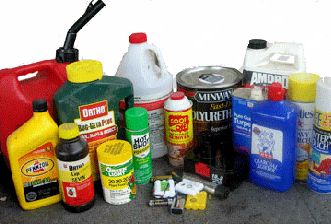
Exposure to small doses of toxic chemicals may not kill you or make you sick immediately, but the
damaging effects of environmental toxins and poisons can accumulate over time and eventually
ruin your health. Avoiding sources of toxic substances may allow you
to live longer and have a healthier life.
The harmful effects of low levels of contaminants can usually be determined after many years of analysis.
Sometimes, occupational diseases provide clues about environmental contaminants.
The Romans were aware that lead could cause serious health problems like madness and death, so
they used slaves to mine the lead used for their pipes. The expression "mad as a hatter" originated
from the neurological damage and mental confusion suffered by workers who processed felt with mercury
compounds in the manufacture of hats. In modern times, it has been recognized that inhalation of asbestos,
coal dust, cotton fiber dust, and tobacco smoke can result in decreased lung function, cancer, and death.
If you would like to learn more information about harmful products like asbestos it might be prudent to check out an online resource.
Even if you live and work in a fairly clean environment, you may be exposed
to harmful substances every day because many types of chemicals are used in
farming, food production, and the manufacture of consumer goods.
For example, polychlorinated biphenyls (PCBs) and
polybrominated diphenyl ethers (PBDEs) which are used widely as flame-retardant additives in
polyurethane foam for carpet padding, mattresses, chairs, sofas and other furniture have been
found in the food supply, including fish and many animal fats. The fire retardants have also
been detected in humans and in human milk across the globe.
Contamination by flame retardants is of concern because they are endocrine-disrupting compounds
with the potential to profoundly affect sexual development.[1]
According to the Centers for Disease Control, approximately 82 people die every day (almost 30,000 per year)
from unintentional poisoning, and another 1,941 are treated in emergency departments.[4]
Unintentional poisoning deaths in the United States increased by 145% from 1999 to 2007,
and they were second only to motor vehicle crashes as a cause of unintentional injury death for all ages in 2007.
Among people 35 to 54 years old, unintentional poisoning caused more deaths than motor vehicle crashes.
Overdoses of opioid pain medications, such as methadone, hydrocodone, or oxycodone, were most commonly involved,
followed by the illegal drugs cocaine and heroin.
While you may not be able to avoid widely dispersed contaminants, you can reduce
your exposure to harmful chemicals at home and in your workplace using three basic principles:
Breathe clean air
Avoid skin contact with harmful chemicals
Do not eat food or drink water with harmful chemicals, harmful bacteria, or parasites
You can use protective equipment such as face masks to filter the air that you breathe, or
gloves to protect your hands from coming in contact with harmful chemicals. However,
you will need to unlearn the things that television commercials have taught you.
You will need to think for yourself.
For example, advertisements teach you that if the room smells, you have to use a room deodorizing
spray or some plug-in gadget that disperses heated scented oil into the air that you breathe.
Before you use a room deodorizing spray such as Lysol, think: If the spray really kills the germs,
what will it do to the cells of your lungs? What should you do instead? Get rid of the source of the smell and
open the windows to get fresh air! Throw out that garbage and clean up the mess with a non-aerosol
cleaner that will not contaminate the air that you breathe.
Manufacturers are not required to list the ingredients used in laundry products, air fresheners, and
many household cleaners. Most perfumed products such dryer sheets, fabric softeners, laundry detergents,
liquid spray air fresheners, plug-in air fresheners, and solid disc deodorizers used in toilets contain
many organic chemicals which vaporize and can be harmful. Sensitive individuals may suffer headaches, seizures,
asthma attacks, or shortness of breath from exposure to the volatile chemicals.
Many air fresheners contain phthalate compounds that have been linked to hormonal abnormalities, birth defects,
and reproductive problems.
Here are some suggestions to keep in mind throughout your home:
Wash thoroughly any fruits and vegetables that may have been sprayed with pesticides, or buy organic produce.
Avoid insecticide sprays. Roach pesticides can contain organophosphates and carbamates which are neurotoxins.
Exposure to pesticides during pregnancy has been found to increase the incidence of autism by 60%.[5]
Use baited traps that don't contaminate the air, your mops and your brooms.
Avoid touching or breathing powdered detergents or dishwasher soaps.
Avoid using Teflon pans at high temperatures because they generate toxic fumes.
Avoid fumes from the stove oven's cleaning cycle and from food cooked at high heat because
harmful chemicals are created at high temperatures.
Avoid breathing the spray of oven cleaner aerosols. Sprays like EASY-OFF oven cleaner contain
highly caustic sodium hydroxide.
Don't use charcoal grills indoors because they produce poisonous carbon monoxide.
Avoid microwave popcorn that uses diacetyl as an artificial butter flavoring ingredient. This chemical has
been associated with fixed obstructive lung disease in microwave-popcorn factories.
In the dining room:
Drink purified water
Do not eat foods with hydrogenated fats because they
double your chances of a heart attack.
Avoid foods preserved with nitrites because they may cause cancer by forming nitrosamines.
Do not eat spoiled food because you may get food poisoning.
Avoid undercooked meat and seafood because it may have parasites.
Avoid smoked foods because they increase risk of colorectal cancer[2]
Avoid foods contaminated with mercury or heavy metals which typically include shellfish and large marine fish.
Don't use glazed ceramic dishes that may leach heavy metals.
Don't use leaded crystal because it contaminates food and drinks with lead.
Don't use pewter dishes or cups to avoid metal contamination.
Furniture polish or other furniture cleaners can contain naphtha that can cause central nervous system problems.
In the garage, workshop, or garden:
Avoid touching gasoline or breathing gas fumes. Gasoline or petrol usually contains
benzene which is a carcinogen.
Antifreeze containing ethylene glycol has a sweet taste and can poison a pet or a child even in small quantities.
Keep antifreeze and other dangerous chemicals out of reach of children, and clean up any spills.
Don't breathe automobile exhaust fumes or the exhaust fumes of generators or other internal combustion motors.
Don't idle cars in enclosed or attached garages.
Fishing weights, bullets, and solder contain lead which is toxic.
Avoid breathing spray paints and paint remover fumes. Choose low-emission paints and well-ventilated work areas.
Don't touch or breathe pesticides.
Don't touch or breathe paint solvents.
Insect repellents containing DEET may irritate skin. Use natural repellents made from lemon or eucalyptus.
In the bathroom:
Avoid skin contact with perfumes.
Don't breathe hair sprays.
Avoid contact with after-shave lotions.
Avoid hair colors, such as Grecian Formula, which have lead acetate.
Don't mix chlorine bleach with other cleaners like ammonia because
poisonous chlorine gas is generated.
In general:
Old surfaces painted with lead paint may flake and pose a poisoning hazard.
Read the labels of prescription medicines to avoid taking the wrong medicine or the wrong dosage by accident.
Avoid fabric softeners because they can cause respiratory problems.[3]
Avoid cigarette smoke. Even second hand smoke has been shown to cause cancer.
Don't burn candles or incense. They are both fire hazards that produce smoke and contaminate the air.
Eliminate fireplace and wood stove use. Use unvented combustion appliances such as stoves and kerosene heaters
only with adequate ventilation.
Avoid smoky rooms.
Avoid dusty places.
Recently dry-cleaned clothing can release perchloroethylene, a probable human carcinogen.
Hang the clothing in a ventilated porch or garage until it is free of chemical smell.
New plastic products made with polyvinyl chloride can emit phthalates which are used as plasticizers
or polybrominated diphenyl ethers which are used as flame retardants.
New carpets and the adhesives used to install them can emit volatile organic compounds. Keep newly carpeted
rooms well ventilated.
The proteins from the hair, saliva, or urine of household pets may cause allergic reactions.
Flea collars for pets may expose you and your children to insecticides.
Don't allow babies or young children to chew on soft plastic toys containing phthalates.
Reduce your time outdoors when the pollen count is high or when there is automobile exhaust pollution.
References
Ernie Hood, "Endocrine Disruption and Flame-Retardant Chemicals: PBDE-99 Effects on
Rat Sexual Development", Environ Health Perspect. 2006 February; 114(2): A112-A113
Marques-Vidal P, Ravasco P, Ermelinda Camilo M,
Foodstuffs and colorectal cancer risk: a review,
Clin Nutr. 2006 Feb;25(1):14-36. Epub 2005 Nov 14.
PMID: 16290272
Anderson RC, Anderson JH,
Respiratory toxicity of fabric softener emissions,
J Toxicol Environ Health A. 2000 May 26;60(2):121-36.
PMID: 10872633
Centers for Disease Control and Prevention, National Center for Injury Prevention and Control.
Web-based Injury Statistics Query and Reporting System (WISQARS) (2010).
Available from URL: www.cdc.gov/injury/wisqars
Janie F. Shelton, Estella Marie Geraghty, Daniel J. Tancredi, Lora D. Delwiche, Rebecca J. Schmidt, Beate Ritz, Robin L. Hansen, Irva Hertz-Picciotto. Neurodevelopmental Disorders and Prenatal Residential Proximity to Agricultural Pesticides: The CHARGE Study. Environmental Health Perspectives, 2014; DOI: 10.1289/ehp.1307044
 Index
Index