 Index
Index

Over half a million people die of cancer in the United States every year. Cancer is the second leading cause of death after heart disease, according to the Centers for Disease Control and Prevention (CDC). More than 7 million people die of cancer every year worldwide.
What is cancer?
Cancer is a disease caused by cells that become abnormal and start to multiply uncontrollably.
The abnormal cells may invade other tissues and cause the cancer to spread (metastasize).
Invasive cancers that grow aggressively and metastasize are called malignant, whereas
abnormal growths that remain localized are called benign.
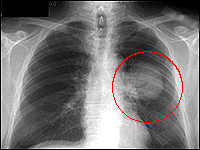
Cancers are usually classified by the types of tissue that they affect. The following table shows the estimated annual incidence of the most common cancers for 2008, according to the American Cancer Society.[1]
| Cancer Type |
Estimated New Cases |
Estimated Deaths |
Percent Mortality |
|---|---|---|---|
| Skin (non-melanoma) | >1,000,000 | <1,000 | 0.1% |
| Lung (Including Bronchus) | 215,020 | 161,840 | 75% |
| Prostate | 186,320 | 28,660 | 15% |
| Breast (Female) | 182,460 | 40,480 | 22% |
| Colon and Rectal | 148,810 | 49,960 | 34% |
| Bladder | 68,810 | 14,100 | 20% |
| Non-Hodgkin Lymphoma | 66,120 | 19,160 | 29% |
| Melanoma | 62,480 | 8,420 | 13% |
| Kidney Cancer | 46,232 | 11,059 | 24% |
| Leukemia (All) | 44,270 | 21,710 | 49% |
| Endometrial | 40,100 | 7,470 | 19% |
| Pancreatic | 37,680 | 34,290 | 91% |
| Thyroid | 37,340 | 1,590 | 4% |
Although skin cancer is by far the most common, lung cancer, which is the second most common, is deadlier. Pancreatic cancer has the worst prognosis; it is fatal 91% of the time.
What causes cancer?
Normal cells communicate through chemical signals that are recognized and interpreted
by the genetic material within each cell. When a cell becomes damaged by chemicals or radiation, a process
called apoptosis kills the cell by breaking it up into components that can be recycled for use by
the body. The action of protein p53, produced by the TP53 gene on chromosome 17, can trigger apoptosis
from within a cell, but cells from the immune system or the surrounding tissue may also trigger apoptosis.
Interfering with the p53 protein may suppress the apoptotic capability of the cell.
Cells that lose the ability to undergo the programmed death of apoptosis can start
reproducing without inhibition and form a tumor.
There are many genetic mutations that can cause cells to reproduce without limits.
Chemotherapy attempts to kill cancer cells by interfering with the different biochemical pathways
that make the cells live forever, but the drugs can never block all the pathways.
Normal cells are transformed into a malignant tumor by the accumulation of mutations that cause the cells to: 1) ignore signals to slow down, 2) stimulate their own growth, 3) circumvent signals to destroy themselves, 4) defeat the limits on reproduction imposed by telomeres, 5) develop the ability to sprout their own blood vessels and 6) consume the surrounding tissues and metastasize.
The chemicals in tobacco and tobacco smoke modify cellular structures. Persons who smoke cigarettes and chew tobacco have greater cancer rates than persons who don't use tobacco. Other risk factors for cancer include obesity, exposure to asbestos, some viruses and bacteria, chemical mutagens, radiation, excessive sunlight, and hereditary genetic predisposition to cancer. Excessive alcohol consumption is associated with increased risk of oral and esophageal cancers.
| Type of Cancer | Risk factors |
|---|---|
| lung cancer | cigarette smoking; exposure to asbestos, uranium and nickel |
| skin cancer | excessive exposure to the sun, tanning salons |
| breast cancer | familial history - genetics |
| cervix cancer | human papilloma virus exposure |
| colon and rectum | high fat diet, low fiber |
| oral cancer | alcohol plus smoking, smokeless tobacco |
| urinary bladder |
aniline dye exposure, cigarette smoking, exposure to parasite Schistosoma haematobium |
| leukemia | exposure to benzene, ionizing radiation |

How to Prevent Cancer
The onset of cancer usually takes a long time, but after it develops, it may spread very fast.
Twenty years may elapse before a smoker starts showing signs of cancer.
To prevent or reduce the chance of cancer, it is necessary to avoid exposure to harmful chemicals,
radiation, and viruses, while maintaining good nutrition to keep the immune system working optimally.
This can be summarized by three rules:
- Don't smoke cigarettes. The major cause of lung cancer is smoking. Tobacco smoke has many carcinogenic chemicals. You can reduce this risk by not smoking and by avoiding bars and smoky places where you can be exposed to second-hand smoke. The smoke from solid fuels, such as coal or wood used for cooking, and the smoke from burning incense also increase the risk of developing cancers of the upper respiratory tract. Learn how to quit smoking.
- Don't chew tobacco. Although chewing tobacco does not have the carcinogens from smoke, the chemicals from tobacco cause changes in the oral mucous tissues in as little as seven days. Over time, the tissues of the mouth develop precancerous white or red patches called leukoplakias or erythroplakias. Oral cancer includes cancers of the mouth, parts of the throat, and pharynx or voice box. Only half of the people who develop oral cancer survive more than five years.
- Avoid alcohol. Light to moderate drinking has been reported to improve longevity, but excessive use of alcohol has a dose-dependent association with cancers of the upper digestive tract, including the esophagus, the mouth, the pharynx, and the larynx.[6,7] More than three drinks a day increases cancer risk substantially. In the United States, 75 percent of esophageal cancers are attributable to chronic, excessive alcohol consumption. Nearly 50 percent of cancers of the mouth, pharynx, and larynx are associated with heavy drinking. The risk of cancer increases even more for people who drink and smoke.
Researchers who studied more than 1.2 million middle-aged women for an average of seven years in the U.K. concluded that women who drink as little as one alcoholic beverage a day (beer, wine, or hard liquor) have a significantly higher cancer risk than women who don't drink at all.[14] The researchers estimated that alcohol consumption could be responsible for as many as 11% of breast cancers in women. Cancer epidemiologist Naomi Allen, an author of the study, said that "There were no minimum levels of alcohol consumption that could be considered to be without risk."
- Avoid exposure to solvents. Gasoline, turpentine, carbon tetrachloride dry cleaning fluid, and other solvents contain substances that are harmful when inhaled or when absorbed through the skin. Benzene is one of the harmful chemicals in gasoline. Long-term exposure to benzene affects the bone marrow where red blood cells form and eventually can cause leukemia. Do not breathe gasoline vapors or other solvents like nail polish remover, and do not expose your skin to chemical solvents that can be absorbed through the skin. Do not apply colognes or perfumes directly to your skin.
- Avoid asbestos dust and environmental chemicals. Inhalation of asbestos dust causes lung cancer. Chrysotile, a fibrous form of magnesium silicate Mg3(Si2O5)(OH)4, was the most common form of asbestos used as an insulating material. Its use was phased out in 1989 and banned entirely in 2004, but it is still found in many old buildings. Avoid dusty home remodeling or construction jobs that may expose you to asbestos particles. Asbestos dust causes scarring of lung tissue that leads to mesothelioma, a form of cancer in which the malignant cells are located in the sac lining of the lungs. Since asbestos was commonly used, it may be a good idea to check out a good resource on mesothelioma if you work in a high-risk field. Other chemicals that are known or suspected environmental triggers for cancers are: BPA (Bisphenol A) in polycarbonate plastics and epoxy resins, PCBs (polychlorinated biphenyls) used as insulating liquids in electric transformers, metallic lead used in solder or in ceramic glazes, arsenic in well water, formaldehyde used in adhesives for plywood panels, and high concentrations of pesticides.
- Don't use mineral talcum powder. Talcum powder is made from talc, a mineral composed of hydrated magnesium silicate H2Mg3(SiO3)4. The U.S. Food and Drug Administration (FDA) considers talc to be generally recognized as safe (GRAS) for use as an anti-caking agent for table salt. However, inhalation of talc has been associated with pulmonary toxicity and lung cancer.[24, 25] Also, application of talc to the pubic area (perineum) is linked with ovarian and cervical cancer.[26] Talc is the basis of many baby powders and foot powders. Avoid the use of talcum powder on babies, particularly baby girls. A study found particles of talc in 75% of the ovarian tumors studied.[28] Many modern formulations of body powders have replaced mineral talcum with starch, but talc is still used extensively. In 2016, several juries held Johnson & Johnson liable for damages for not warning consumers about a potential cancer risk.[27] In July of 2018, a St. Louis jury awarded $4.69 billion to 22 women who sued Johnson & Johnson alleging their ovarian cancer was caused by using its powder as a part of their daily feminine hygiene routine.
- Avoid exposure to ionizing radiation. Ionizing radiation has enough energy to disrupt molecular bonds and produce free radicals and charged ions. This kind of radiation breaks down DNA molecules and triggers mutations and abnormal reproduction of the cells. A report from the National Academies of Science[8] has confirmed that there is no safe level of exposure to radiation and that even very low doses can cause cancer. X-rays, natural background radiation, and radiation from radioactive isotopes can all be harmful. One of the most common sources of radiation in the home is radon, a heavy gas from the decay of radium which seeps from the ground and concentrates in basements. It is the leading cause of lung cancer among non-smokers. Avoid unnecessary X rays, particularly CAT scans.

- Don't get sunburned, but get enough Vitamin D. Exposing the skin to the ultraviolet (UV) radiation from the sun produces Vitamin D that helps to build strong bones. However, too much sun can burn the skin and cause cataracts. Sunbathing and excessive exposure to the sun is the most common cause of skin cancer, such as melanoma. The use of sun block can protect the skin from burning, but it also blocks the ultraviolet rays that make Vitamin D. Exposure to the sun should be limited to 15 or 20 minutes per day to avoid skin damage that can lead to skin cancer.
Several studies have found that an increased level of Vitamin D reduces the incidence of various types of cancer.[13] For this reason, many doctors and nutritionists suggest taking a daily dose of 1000 IU of Vitamin D instead of the current Recommended Daily Allowance (RDA) of 400 IU for adults.
- Avoid tanning beds or tanning booths. A 2009 report from the International Agency for Research on Cancer classified tanning beds in the highest cancer risk category: "carcinogenic to humans". The report concluded that the risk of melanoma increases by 75 percent when use of tanning beds and sunlamps begins before 30 years of age. In addition, several other studies have linked the use of UV-emitting tanning devices and melanoma of the eye. Any unusual or bleeding moles should be checked by a dermatologist.
- Some Bacteria and Viruses can cause cancer. Vaccinate against HPV. Infections by Human papillomaviruses (HPVs) are the primary cause of cervical cancer. There are more than 100 types of HPVs, but only a few pose a high risk of causing cancer. In 2006, the U.S. Food and Drug Administration approved Gardasil, a vaccine that is effective in preventing infection by the HPVs that cause most cervical cancers. Since HPV infections are very common and may not display any symptoms, vaccination at an early age is recommended. This is something that parents should do for their children before they become sexually active.
Other viruses such as Hepatitis C may also cause cancer, but vaccines are at an early stage of development. Screening of blood used for transfusions has virtually eliminated medical procedures as a source of hepatitis infection. Sharing needles for injecting drugs is the most common cause of new Hepatitis C infections, followed by blood-to-blood contact through sexual activity, sharing personal care items such as razors, toothbrushes, or nail clippers that might have blood on them, and tattooing or acupuncture with unsterilized or improperly cleaned needles.
Infection with Helicobacter pylori, the bacteria responsible for chronic gastritis and peptic ulcers, increases the risk of stomach cancer. H. pylori only grows in the intestines and it is usually contracted during childhood. Many people who have this organism in their gastrointestinal tract do not develop ulcers or gastritis. Simple blood and stool tests can be used to diagnose infection by H. pylori, and the infections can be eliminated with a course of antibiotics lasting 10 to 14 days. Infections of H. pylori have also been attenuated by eating 70 grams per day of broccoli sprouts for two months. Broccoli sprouts naturally contain elevated levels of sulforaphane which is an isothiocyanate compound with powerful bactericidal properties.[15]
Antibiotics can destroy intestinal bacteria indiscriminately thereby also killing some types of organisms that may boost the body's ability to fight malignancy by slowing the growth of tumors or by enhancing the effectiveness of cancer immunotherapy drugs.[31]
- Keep your weight down. Being obese or overweight increases the risk of coronary heart disease, stroke, high blood pressure, and diabetes, but it also increases the risk of developing several types of cancer including colon cancer, breast cancer, as well as cancer of the esophagus, thyroid, kidney, uterus and gall bladder. In the United States, it is estimated that 14 percent of cancer deaths in men and 20 percent of cancer deaths in women are the result of being overweight or obese.[5] People who are grossly overweight, with a Body Mass Index of at least 40, have cancer death rates 52 percent higher for men and 62 percent higher for women than the rates in men and women of normal weight. Preventing weight gain can reduce the risk of many cancers. It is important to establish habits of healthy eating and physical activity early in life to prevent overweight and obesity. People who are already overweight or obese should avoid additional weight gain, and try to lose weight gradually through a low-calorie diet and exercise.
- Avoid food contaminated with fungus. Certain types of molds that grow on food produce minute amounts of toxins called mycotoxins. Aspergillus flavus, a fungus that grows mainly on grains and legumes such as peanuts, produces powerful compounds called aflatoxins. Aflatoxins can cause liver disease and liver cancer even when ingested in minute amounts. Molds and fungi grow mostly when the grains or nuts are in storage. Since nuts are harvested only in the late summer to fall, make sure that any raw nuts from the previous year's harvest are fresh and not rancid. Do not eat nuts that are stale or discolored.
Some foods like blue cheese, Roquefort cheese, or Gorgonzola cheese derive their flavor from special cultures of blue fungi like Penicillium roqueforti. The major human health concern for P. roqueforti is its ability to produce mycotoxins such as isofumigaclavin C, penicillic acid, PR toxin, patulin, botryodiploidin and roquefortine. Ingestion of these mycotoxins can cause mutations, tumors, as well as extensive liver, kidney and nerve damage, but these effects are noted only at very high doses of the toxins.[17] Cheeses such as Brie and Camembert are also produced by the use of white fungi that create a crust on the surface of the cheese. The molds used to manufacture cheeses are generally safe to eat.

- Avoid raw mushrooms. The familiar button mushrooms (Agaricus bisporus) that are found on store shelves contain a hydrazine compound (agaritine) that is a known carcinogen. The compound can be eliminated by cooking. Agaritine is found in fresh button mushrooms Agaricus bisporus at a level of approximately 228 micrograms per gram of wet weight, and in Shiitake mushrooms (Agaricus edodes) at a level of 0.82 micrograms per gram of wet weight. Agaritine is not present in canned button mushrooms. Rates of urinary bladder carcinoma on mice were 30.8% for fresh button mushrooms and 23.5% for fresh Shiitake mushrooms using a bladder implantation procedure.[16] Another study in which mice were given a common metabolite of agaritine in their drinking water more than doubled the occurrence of cancerous tumors in the lungs and blood vessels.[21] Many salad bars feature sliced raw mushrooms. Avoid them.
- Don't heat foods to high temperature. Cooking at high temperatures breaks down food molecules and creates mutagenic compounds that increase the risk of cancer. Acrylamides are formed when frying, roasting, grilling or baking carbohydrate-rich foods at temperatures above 120°C (248°F), e.g., French fries. Acrylamides have been linked to breast cancer[11]. Cooking meats such as beef, pork, fowl, and fish at high temperatures (barbecuing and grilling) creates carcinogenic heterocyclic amines (HCAs) that pose a cancer risk.[9,10] The National Cancer Institutes's Division of Cancer Epidemiology and Genetics found a link between the incidence of stomach cancer and the consumption of cooked meats. Those who ate their beef medium-well or well-done had more than three times the risk of stomach cancer than those who ate their beef rare or medium-rare. The content of HCAs increases threefold when the cooking temperature is increased from 200° to 250°C (392° to 482°F). Oven roasting and baking are done at lower temperatures, so lower levels of HCAs are likely to form, however, gravy made from meat drippings contains substantial amounts of HCAs. Stewing, boiling, or poaching are done at or below 100°C (212°F); cooking at this low temperature creates negligible amounts of the carcinogenic chemicals.
- Avoid cured meats and smoked meats. Processed meat consumption has been associated with an increased risk of stomach cancer. Carcinogenic nitrosamines can form when the amines found in proteins react with the sodium nitrite that is added as a preservative to cured meats. High consumption of processed meats such as bacon, sausage, hotdogs, ham, and salami, but not other meats (i.e., red meat, fish and poultry), has a statistically significant association with cancer.[18]
Epidemiological studies indicate a statistical correlation between the increased occurrence of cancer of the intestinal tract and the frequent intake of smoked foods. Smoke from wood pyrolysis contains phenols, aldehydes, carboxylic acids, and polycyclic aromatic hydrocarbons such as benzo[a]pyrene (BaP), which is a known mutagen and carcinogen.[19]
- Eat vegetables and fruits. Colorectal cancer is associated with diets high in fat and low in fiber. Increase the intake of fiber in your diet by eating several servings per day of vegetables, fruits and whole grains. Lower the fat in your diet by eating lean cuts of meat. Compounds found in cruciferous vegetables, such as broccoli, cauliflower, and watercress, have been shown to block lung cancer progression in both animal studies and in tests with human lung cancer cells. The American Institute of Cancer Research estimates that by increasing the daily intake of fruits and vegetables to 5 servings per day, cancer rates could decline as much as 20%. Epidemiological studies provide evidence that the consumption of cruciferous vegetables protects against cancer more effectively than the total intake of fruits and vegetables.[20] Colon microbiota affect the health of the host organism through physical interactions and, indirectly, through their metabolism. Disruptions to the microbiota may initiate intestinal inflammation that can promote development of colon cancer. Adding dried plums to the diet increased Bacteroidetes and reduced Firmicutes in the distal colon without affecting the proportions found in the proximal colon. This significantly reduced the number of aberrant crypts in the colon, which are the earliest observable precancerous lesions.[30] Learn more about the microbiome.

- Include phytonutrients in your diet. Phytonutrients are found in brightly colored vegetables. Phytonutrients are organic components of plants which promote human health. Some of the common classes of phytonutrients include: carotenoids, flavonoids (polyphenols) including isoflavones (phytoestrogens), anthocyanins, and inositol phosphates (phytates). Although more research is needed to establish the mechanisms of action of the various phytochemicals, they are thought to serve as antioxidants which enhance immune response. There is some evidence that the phytonutrients and polyphenols in pomegranate fruit juice and green tea can reduce Prostate-Specific Antigen (PSA) levels and prevent prostate cancer.[3,4] Anthocyanins are the chemical components that give the intense color to fruits and vegetables, such as blueberries, red cabbage and purple sweet potatoes. Studies show that anthocyanins may be effective in cancer chemoprevention by interfering with the molecular mechanism of carcinogenesis, and by promoting apoptosis of tumor cells.[12] Black raspberries and blueberries have also been found to significantly suppress the incidence of mammary tumors by 10% to 30% in experimental estrogen-induced carcinogenesis.[23]

- Breastfeed your children. Women who breastfeed their children provide the best nutrition possible for their babies and also reduce their chance of breast cancer. Epidemiological studies in 30 countries showed that the relative risk of breast cancer decreased by 4.3% for every 12 months of breastfeeding in addition to a decrease of 7.0% for each birth.[22] The reduction in breast cancer associated with breastfeeding was observed for women in developed as well as developing countries. The studies concluded that the longer women breast feed the more they are protected against breast cancer, and that the lack or short duration of breastfeeding by women in developed countries makes a major contribution to the high incidence of breast cancer in these countries.
More recent studies have confirmed that breastfeeding a strong protective effect against cancer, especially in relation to particular types of tumors including the most common hormone-sensitive strain.[29] The protection was strongest in women who had a history of breastfeeding for six months or longer. Breastfeeding reduced the chance of the cancer recurring by 30 percent, and the risk of dying dropped by 28 percent. The reduction of cancer risk was proportional to the cumulative lifetime duration of breastfeeding. The more months a mother breastfeeds, the lower her risk for cancer.




